
Browse Leland Directory Sources
Leland people directories do not form one master list. Each source reflects a role or event. A town roster identifies public officials. A school directory lists faculty and staff. The county tax roll links an assessed owner to a parcel, while a deed index links named parties to recorded instruments. Business and license searches cover firms or credential holders. Library and archive collections reach people who lived here before current web directories existed.
| Name source | People or roles shown | Record keeper | How to use it |
|---|---|---|---|
| Town staff roster | Town employees, mayor, council | Town of Leland | Free department filter |
| County staff search | County workers and departments | Brunswick County | Free name or category search |
| State employee directory | North Carolina agency workers | State of North Carolina | Free employee or agency search |
| School and college rosters | Faculty, staff, and public work contacts | BCS and Brunswick Community College | Free online browsing |
| Property and deed indexes | Assessed owners and document parties | Tax Office and Register of Deeds | Online, then office for copies |
| Business and license indexes | Filed business parties and credential holders | North Carolina agencies and boards | Statewide web searches |
| Historical name collections | Past residents, students, families, and businesses | Library, DigitalNC, and State Archives | Online plus onsite research |
Start with the source tied most closely to the person’s known role. These Leland people directories are narrow by design. A name missing from a public staff roster may still appear in a meeting packet, parcel index, yearbook, newspaper, or older county volume. For a private resident, government work directories are the wrong first stop. Property, business, historical, and public meeting records offer more useful paths without implying that every local person belongs on a public list.
Town of Leland Staff Directory
The Town of Leland roster is the most local current directory. It groups names under Administration, the Town Clerk’s Office, Communications, Finance, Fire, Planning and Inspections, Police, Public Works, and other departments. Mayor and Council entries appear as their own group. The interface does not act like a broad keyword database. Readers browse the full roster or apply the department control, then read each person’s name, title, and public telephone number.
| Control | Input kind | Required? | What it does |
|---|---|---|---|
| Departments | Filter | No | Narrows the visible roster to one town unit |
| Contact Us | Link | No | Provides a general route when no named staff member fits |
The Town of Leland staff directory capture shows the department-led browsing pattern.
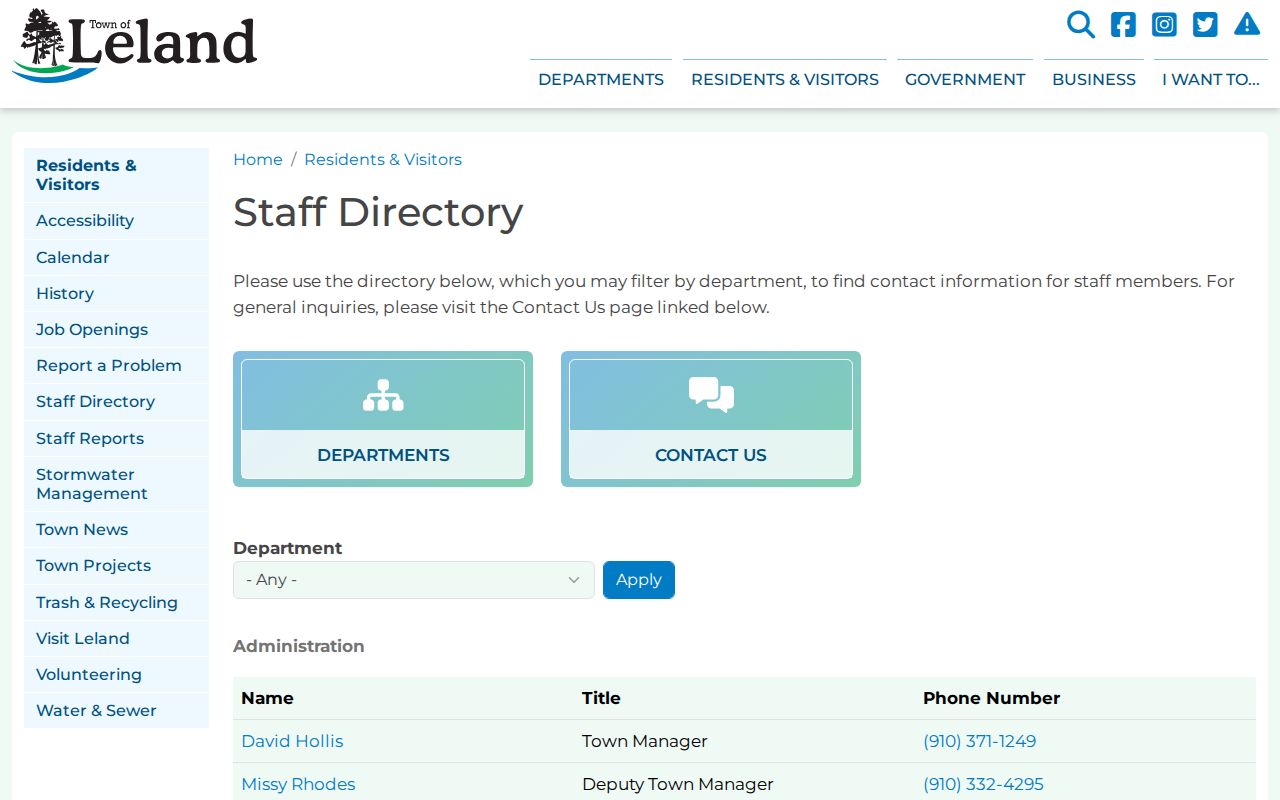
The grouped display helps distinguish people with similar names by public role. If a name is absent, call Town Hall at 910-371-0148 during its weekday 8 a.m. to 5 p.m. hours or use the department page. The Town Clerk is the cross-department fallback for an existing municipal record, not a substitute residential directory.
Note: Town Hall records cover municipal work; Brunswick County and state offices hold many other Leland name indexes.
Leland and County Staff Directory
Many services used by Leland residents belong to Brunswick County, whose government center is in Bolivia. The county directory can be searched by category, first name, or last name. Department groups route readers to the Register of Deeds, Tax Office, Board of Elections, Land Records, GIS, library branches, and other units. Individual listings may provide a title, email address, and direct work phone. That is richer than the town roster in some departments, but it remains an official-work directory.
The Brunswick County directory search image records the available name fields and department categories.
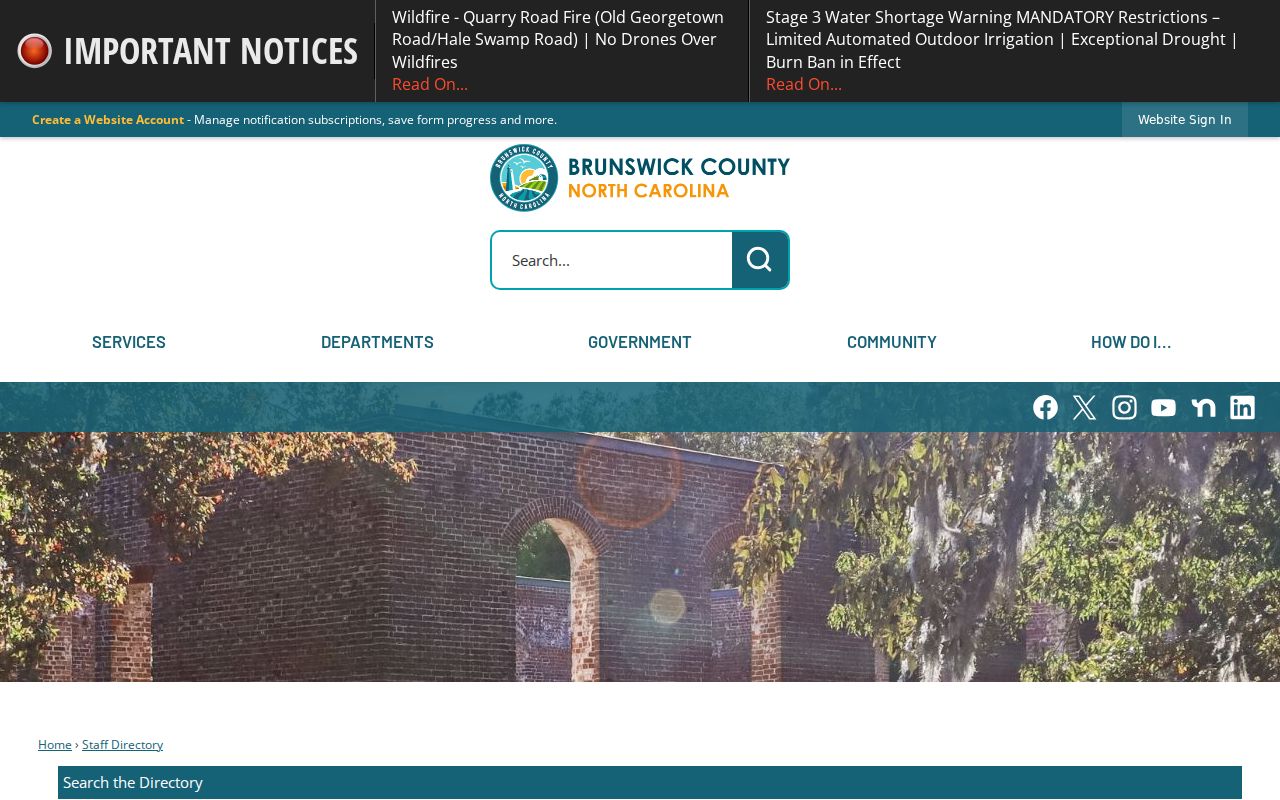
The county search is especially useful when the correct custodian is unclear. A Board of Elections entry, for example, may identify the director, deputies, registration clerk, and election specialists. A Tax Office or Land Records listing points to the staff who maintain assessed ownership and parcel maps. If a person is not listed, use the department’s main contact rather than assuming the office does not hold the record.
For a North Carolina agency contact, the state employee and agency directory extends the search beyond Brunswick County. It covers public work contacts statewide and does not list private residents.
| Full name | Identifies the public staff member |
|---|---|
| Agency unit | Shows the department or service group |
| Public title | Distinguishes role and responsibility |
| Work email | Appears on many county and school entries |
| Work phone | May be a direct line or extension |
Leland School and College Directories
Brunswick County Schools maintains staff pages for district offices and schools, including Leland Middle, Lincoln Elementary, and North Brunswick High. The inspected technology roster accepts a keyword, first name, or last name. Results may display a person’s name, title, faculty or staff role, public email, and school phone or extension. Ten results appear per page, and the inspected technology page reported 142 entries. Duplicate or variant titles can occur, so match email and role before deciding two results represent two people.
The Brunswick County Schools staff directory capture shows its public search interface.
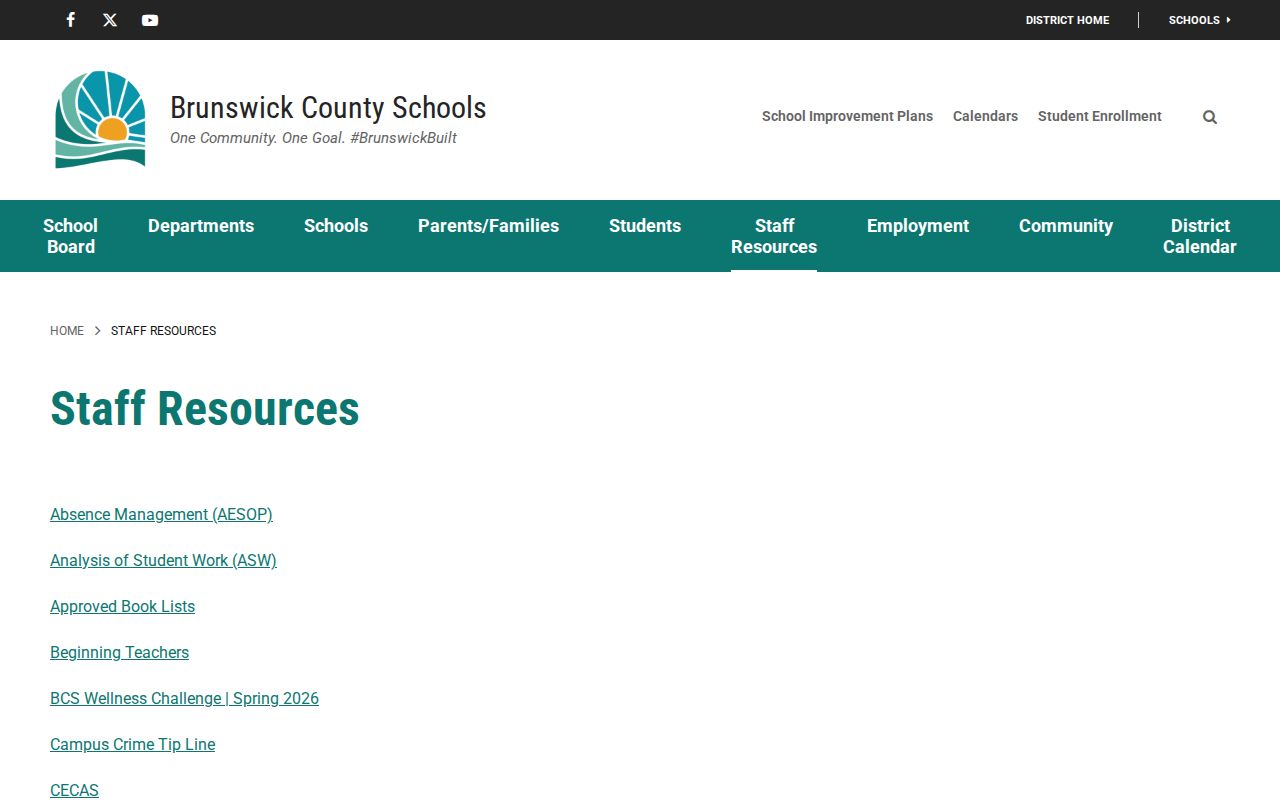
The name boxes make this directory better suited to a known staff member than the Town roster. School pages also help tie a public contact to one campus. Student information follows separate privacy rules, so a staff directory should never be treated as a student list or alumni roster.
Leland College Directory Contacts
Brunswick Community College adds another education directory for county faculty, staff, offices, and academic departments. The college faculty and staff directory capture shows that public institutional route.
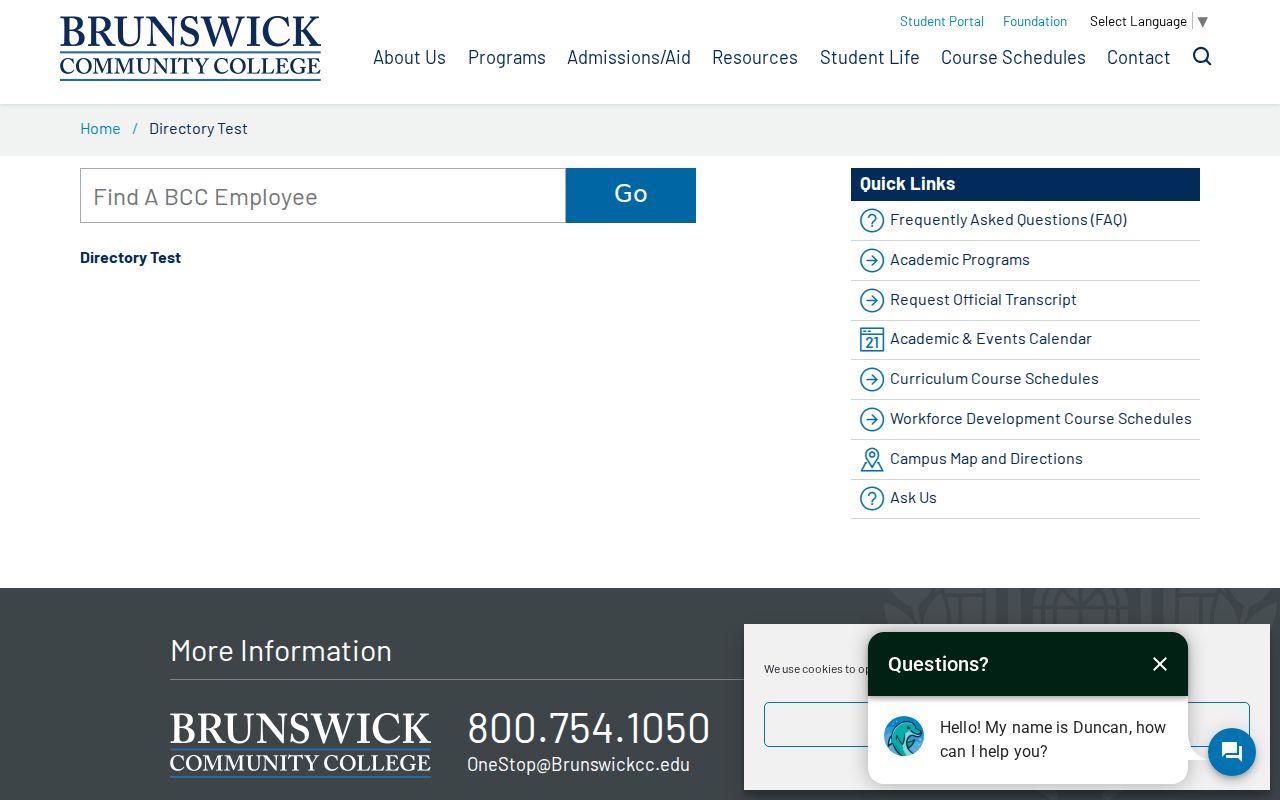
College entries can confirm a public work role or lead to the right department. They do not create a complete list of people who studied at the college. For past students, yearbooks, commencement programs, newspapers, and donated archival collections are more fitting sources.
Leland Property-Owner Directories
Brunswick County’s property systems work as specialized Leland directories. The county real-estate search can connect an assessed owner name to a parcel identifier, situs address, mailing address, value, and property card. A situs address means the location of the parcel. The mailing address is where tax correspondence goes and may be a post office box, agent, or another property. Neither field proves who occupies the land.
The county GIS viewer then places the parcel on a map. Its documented locator accepts an address or Tax Parcel ID, the county’s unique parcel key. For many Leland-area addresses, the street type and quadrant suffix matter. Once the parcel is clear, the Register of Deeds index can reveal grantors and grantees, the parties transferring land, plus deed references and other recorded instruments. The public portal has a CAPTCHA gate, and its earliest online year was not verified. Older indexes or certified copies may require the office in Bolivia.
Keep the meanings separate. The tax roll names an assessed owner, GIS maps the parcel, and the deed records a transfer. None is a full resident directory.
The general rules for inspection, copies, and custodian requests belong with Leland public records access. Here, the key is choosing the name index that answers the property question.
Note: A parcel identifier is more stable than owner spelling when carrying a Leland address between tax, GIS, and deed directories.
Leland Business Credential Directories
A Leland firm may leave several public names. The North Carolina Secretary of State search can show a legal entity name, SOS ID, status, filing date, registered agent, company officials, addresses, and filing history. An assumed name is the public trade name under which a person or entity operates. North Carolina’s statewide assumed-name database covers filings made on or after December 1, 2017. Older assumed-name filings must be checked with the county Register of Deeds.
Occupation-specific boards supply a second layer. North Carolina provides separate public license searches for physicians, nurses, lawyers, contractors, real-estate brokers, architects, engineers, surveyors, and other licensed roles. Fields vary by board, but they often include a name, license number, status, city, classification, or public action. Leland does not maintain one universal town business-license roll, so local permits and inspections answer activity-specific questions rather than replacing the state entity index.
Insider tip: Compare the SOS entity, assumed name, and parcel owner. An operating firm, its trade name, and the landholding company often differ.
A registered agent is a legal contact, not proof of ownership or daily control. Likewise, a professional license address may be a business office rather than a home. The Northern Brunswick County Chamber directory can add a voluntary member contact, but it is not a complete register of all Leland businesses.
Leland Directory Gaps and Limits
No reliable official directory lists every Leland resident. Current residential white pages have shrunk, and no verified public phone book covers all town households. Neighborhood, congregation, alumni, club, and community rosters are often private or opt-in. That absence protects legitimate privacy interests and should not be filled with unverified commercial profiles.
Official alternatives depend on context. Meeting minutes and board packets may name civic participants. Property rolls name assessed owners. Cemetery surveys and obituaries support family research. A yearbook can place a student or staff member at a school in a given year. A license board can confirm a public credential. Each record proves only what its keeper says it proves.
Use lawful, personal purposes and respect anti-harassment limits. When two entries share a name, compare a middle initial, public role, date, former address, or related record before joining them. A directory hit is a lead to verify, not a complete identity profile.
Leland Library Directory Trails
Leland Library at 487 Village Road is the closest public access point for older name research. Brunswick County Library collects county history, North Carolina biography, and genealogy material. Its databases include Ancestry Library Edition, HeritageQuest, Digital Sanborn Maps, and the Brunswick Beacon archive through NewsBank. Ancestry is onsite only through the library network. Library computers and internet access are free for adults, while print and copy charges apply.
Leland Library
487 Village Road
Leland, NC 28451
Branch manager line: 910-253-1808
State Archives
Older Brunswick court, estate, tax, election, land, marriage, and county-government series may appear in transferred collections.
The official library pages do not publish a verified list of Leland directory titles, publishers, reverse-directory years, obituary indexes, or yearbook runs. Ask the branch or Harper Library for a title-and-year inventory. Then use DigitalNC for donated newspapers, yearbooks, directories, and community collections. Search Brunswick County and school names as well as Leland because catalogs may describe the county or institution instead of the town.
Note: Confirm a collection’s title and years with library staff before planning a visit or claiming a gap in coverage.
Cross-River Leland Name Directories
Leland sits just west of Wilmington across the river system, while family, school, business, and civic ties cross the county line. A person may appear in a Wilmington newspaper, institution, museum collection, or directory even while a Brunswick record identifies the residence. New Hanover County Public Library local-history resources and Cape Fear Museum collections can therefore resolve a name missing from a narrow Leland search.
Northern Brunswick history also reaches nearby Navassa and the Gullah Geechee Cultural Heritage Corridor. Church records, cemetery surveys, oral histories, plantation names, and post-emancipation community sources may organize people by river settlement or congregation rather than today’s postal city. Early references can use rural routes, crossroads, waterways, or simply Brunswick County.
This regional approach is especially useful for old addresses. A reverse directory maps an address to an occupant, while an ordinary directory starts with the person’s surname. When no verified reverse volume exists, combine a parcel and deed trail with telephone books, census records, permits, obituaries, and newspapers. Preserve the source date. Annexation can change the municipal label without changing the older record.
Historical Leland Directory Eras
Leland’s records span distinct jurisdictions. Brunswick County formed in 1764 from parts of Bladen and New Hanover counties. The settlement gained the Leland name in 1897, and the post office opened in 1898. The town incorporated in 1989. Earlier residents usually will not appear in municipal files because a Town of Leland custodian did not yet exist. County, postal, railroad-era, church, cemetery, and Wilmington-area collections fill that gap.
- City directory
- A printed name and address list, sometimes with an occupation or business entry.
- Reverse directory
- A volume arranged by street address or telephone number instead of surname.
- Finding aid
- An archive’s description of a collection, boxes, volumes, dates, and access terms.
- Predecessor county
- The earlier jurisdiction that kept records before Brunswick County existed.
A compact civic-founder directory begins with Leland’s 1989 incorporation vote, which passed 427 to 42 among roughly 640 eligible voters. The Town’s plan names twelve Charter Commission members and says five became the first elected council. Early minutes, election material, newspapers, and deeds tied to those names can reconstruct the new government’s first network.
Myth check: digitized does not mean complete. An online name index may cover modern data while older volumes, maps, loose papers, and local collections remain onsite. Search Brunswick County for the long period before incorporation, predecessor counties for pre-1764 matters, and Leland municipal sources only for the town era. Exact printed directory and yearbook holdings still require catalog or staff confirmation.
Note: No official source verified a Brunswick courthouse fire or lost-record interval, so confirm each missing series with its custodian.